

Can Art Just Be Art?
No Culture Was Harmed in the Making of It.
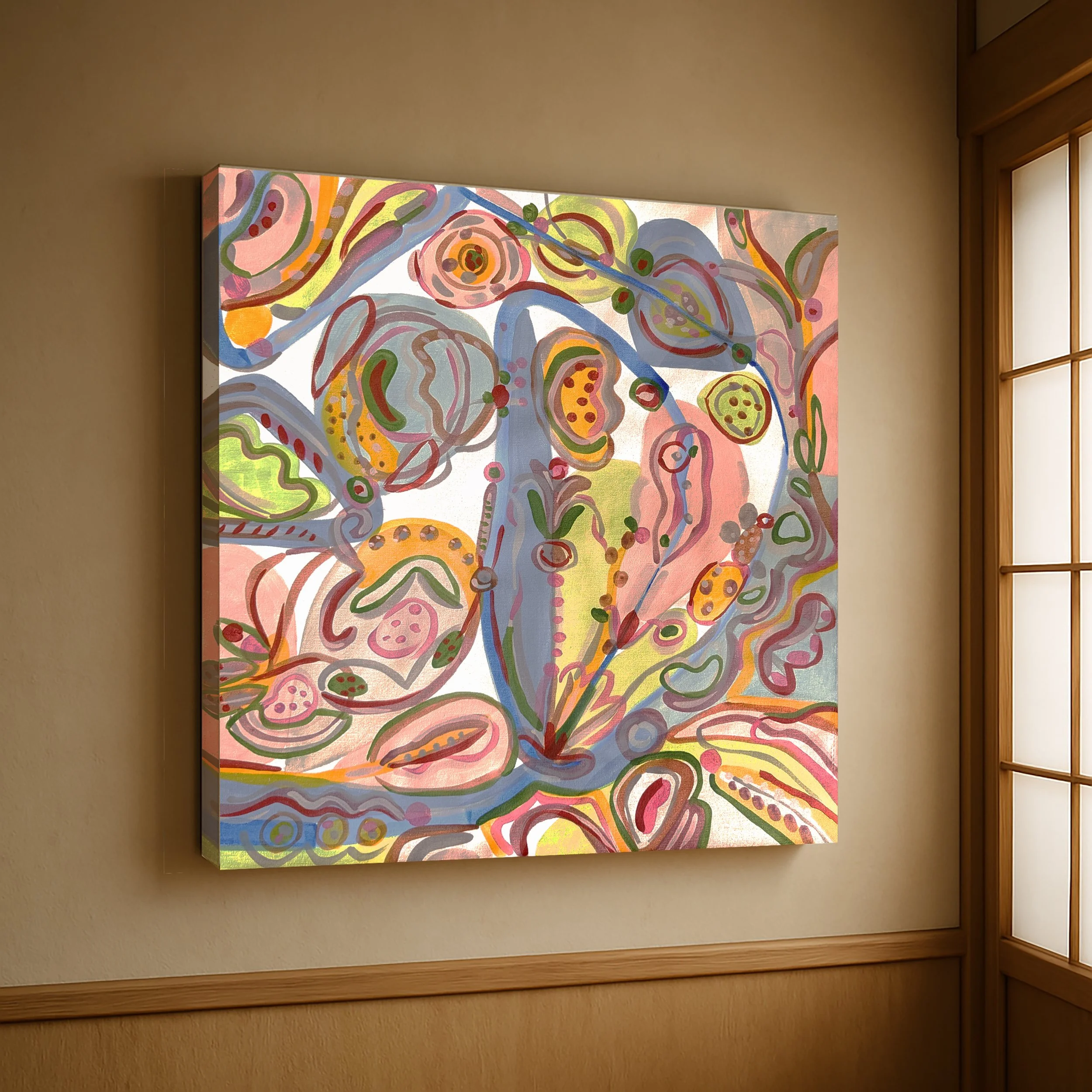
Pollen, 2025
I often come across the phrase art and culture—in exhibitions, editorials, institutions, and conversations around contemporary practice. It makes me wonder: why are the two so frequently presented as inseparable?
Culture is how we live. It is language, food, rituals, customs, technology, entertainment, beliefs, and the behavioural sense that shapes our society.
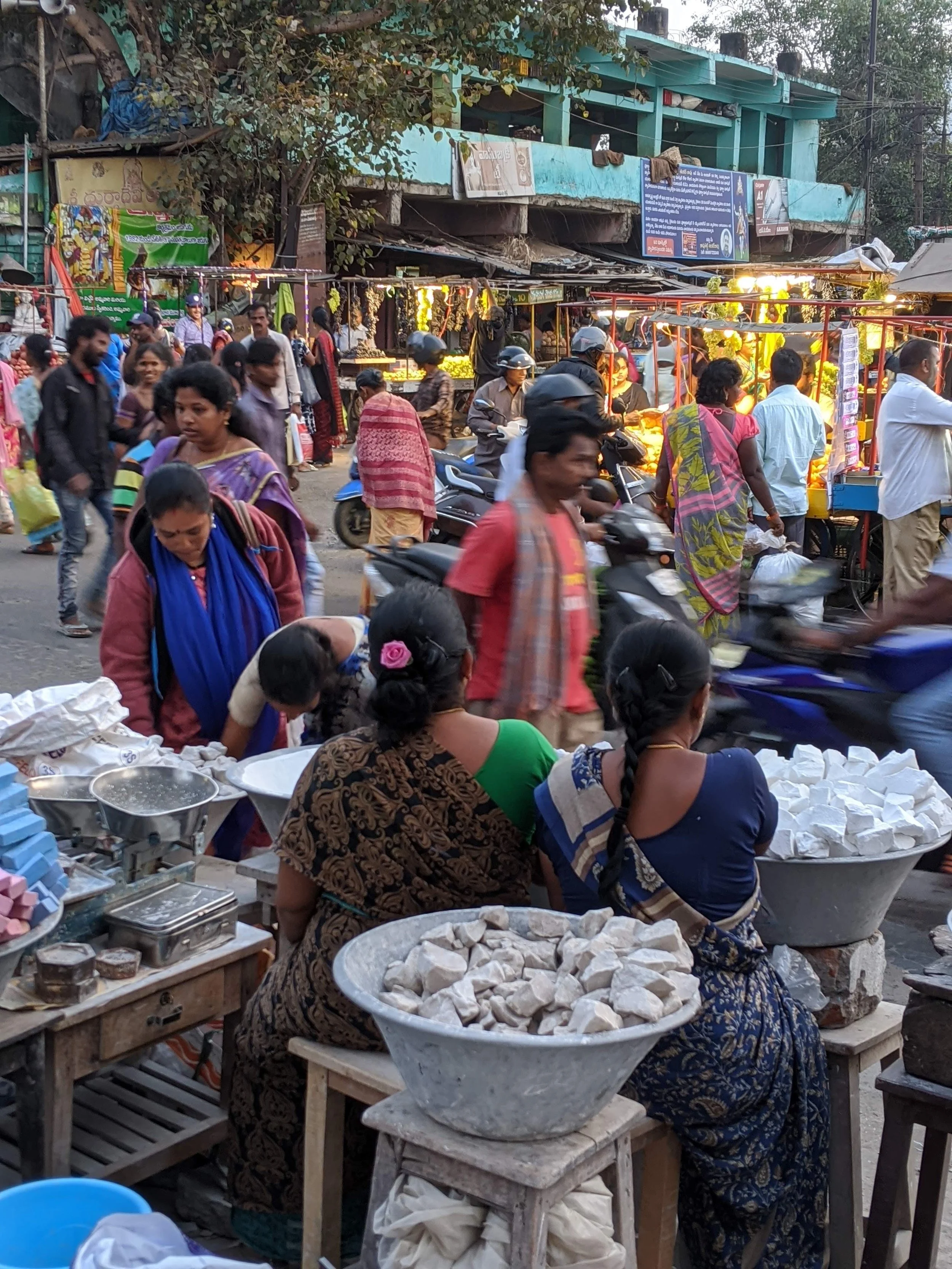
Women selling white chalk at a market in Andhra, India
Art, to me, is something different. It is a way of making, sensing, questioning, expressing, and experimenting. It can engage with culture, respond to it, celebrate it, or challenge it. But I don't believe it needs cultural validation to exist.
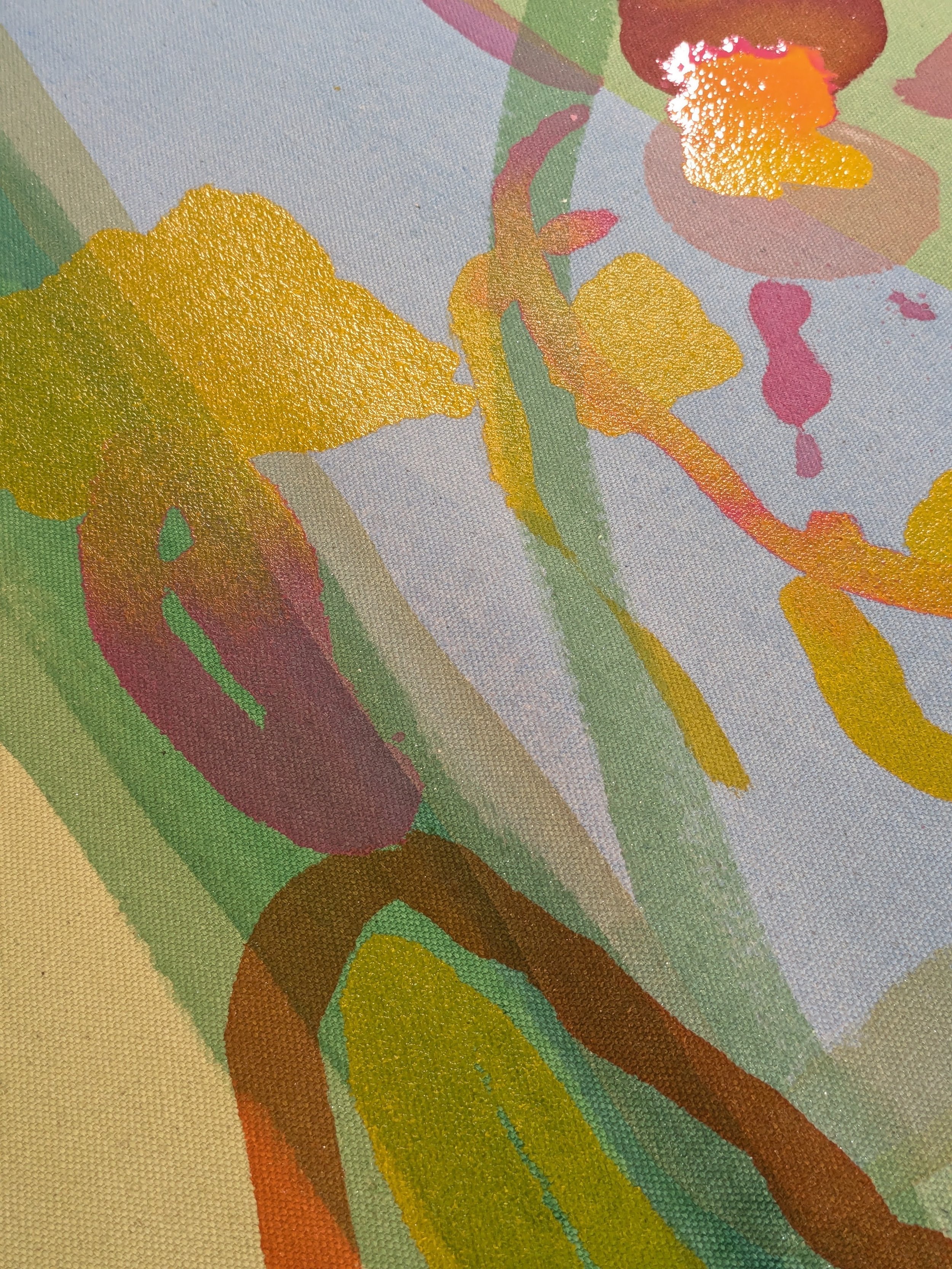
Close up of a painting in progress
As an abstract artist, I'm not trying to document society or explain politics. I'm interested in emotion, perception, material, colour, and the experiences that exist before language. That feels no less significant because it isn't tied to a cultural narrative.
Artists like Mark Rothko searched for the spiritual through colour. Wassily Kandinsky and Hilma Klint believed abstract form could communicate beyond representation. Marina Abramović explored presence, endurance, and the relationship between artist and viewer. I know their works were born from specific moments in history, but what stays with me is how deeply human they feel beyond that context.
What I find myself questioning is the contemporary art world's insistence on its own cultural significance. If a work is experienced by a few hundred people in a gallery and discussed within relatively small art circles, while millions are influenced every day by cinema, advertising, algorithms, social media and now AI, is gallery art really shaping culture to the extent we often claim?
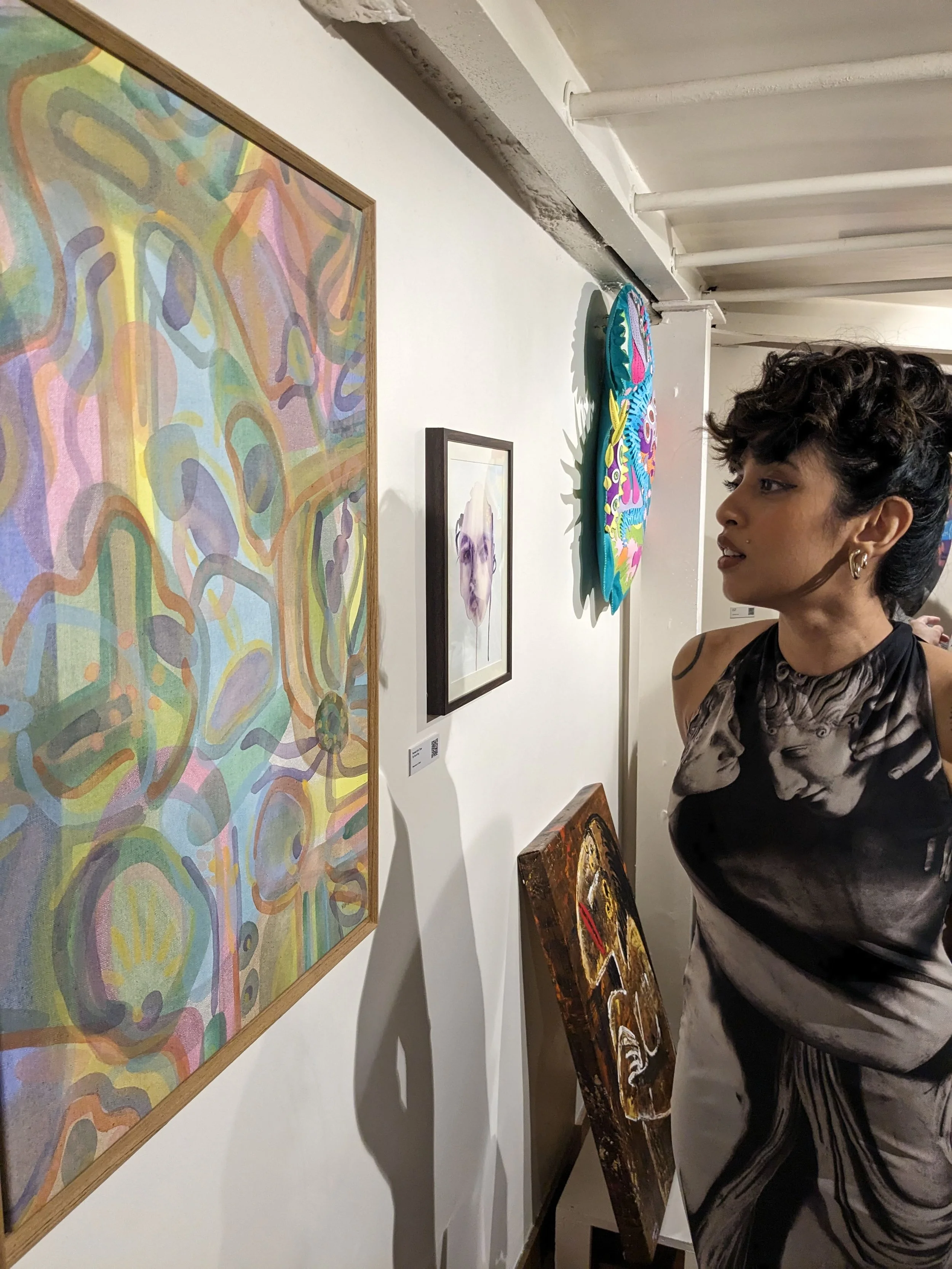
A friend looking at my painting at Method, Kala Ghoda
I have immense respect for artists whose work is rooted in politics or social change. Some of it has shaped the way we see the world. What I keep wondering is whether we've started looking for cultural frameworks before allowing art to simply exist on its own terms.
Maybe art doesn't always need to change culture.
Maybe, sometimes, it simply needs to change the person standing in front of it.
And perhaps that is enough.
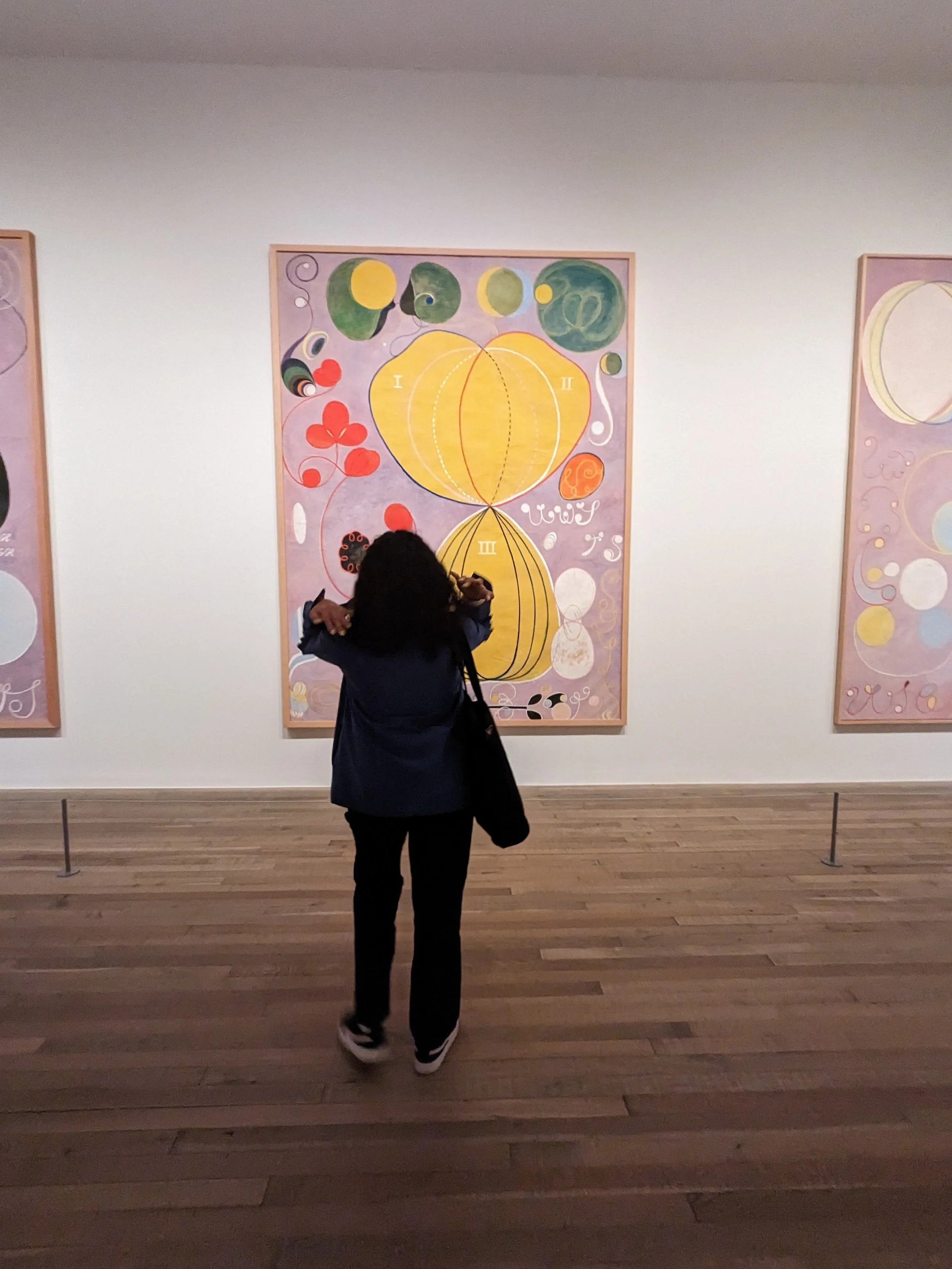
Visited Hilma Af Klint & Piet Mondrian: Forms of Life, Tate London, 2023
